The everlasting strop

Among the relics kept within the walls of our shop there are different types of strop, a fundamental tool for the maintenance of straight razors.

Let’s clarify immediately: the strop is not used to sharpen the razor blade (special stones serve this purpose ), but to refine or revive the edge.

In fact, the razor blade gets damaged over time: sharpening can produce small grooves due to rubbing, shaving itself can lead to the formation of tiny teeth due to the collision with the hair and moisture favosr micro-oxidation. All this reduces the blade’s ability to cut, hinders its smoothness and makes it more irritating to the skin.

The use of the strop aims at eliminating these imperfections from the blade.

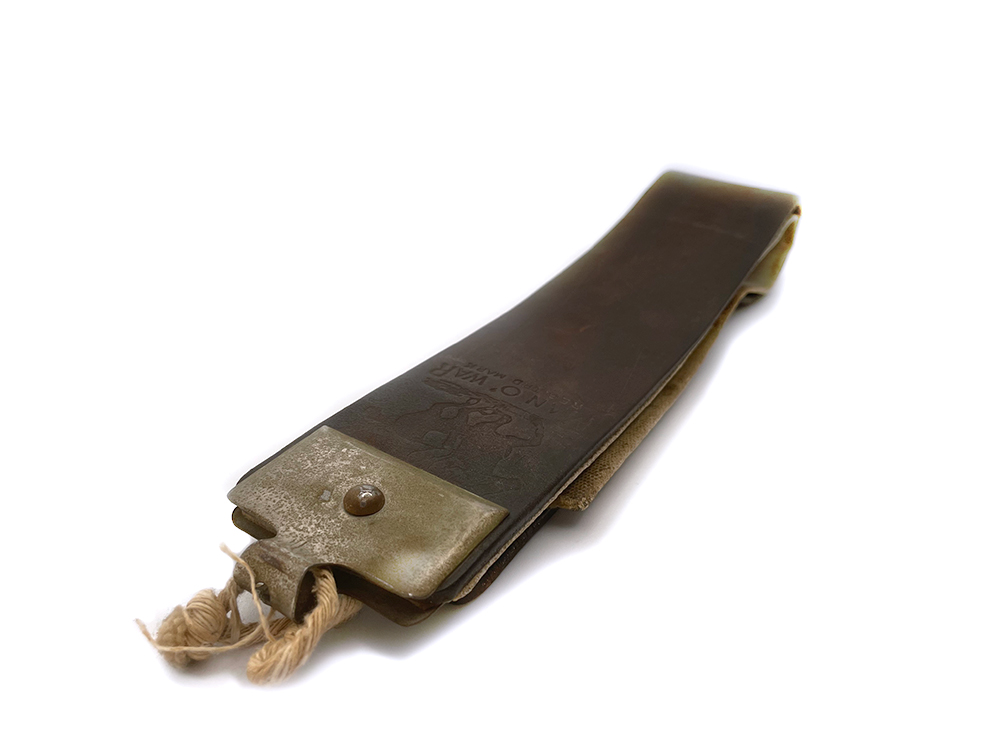
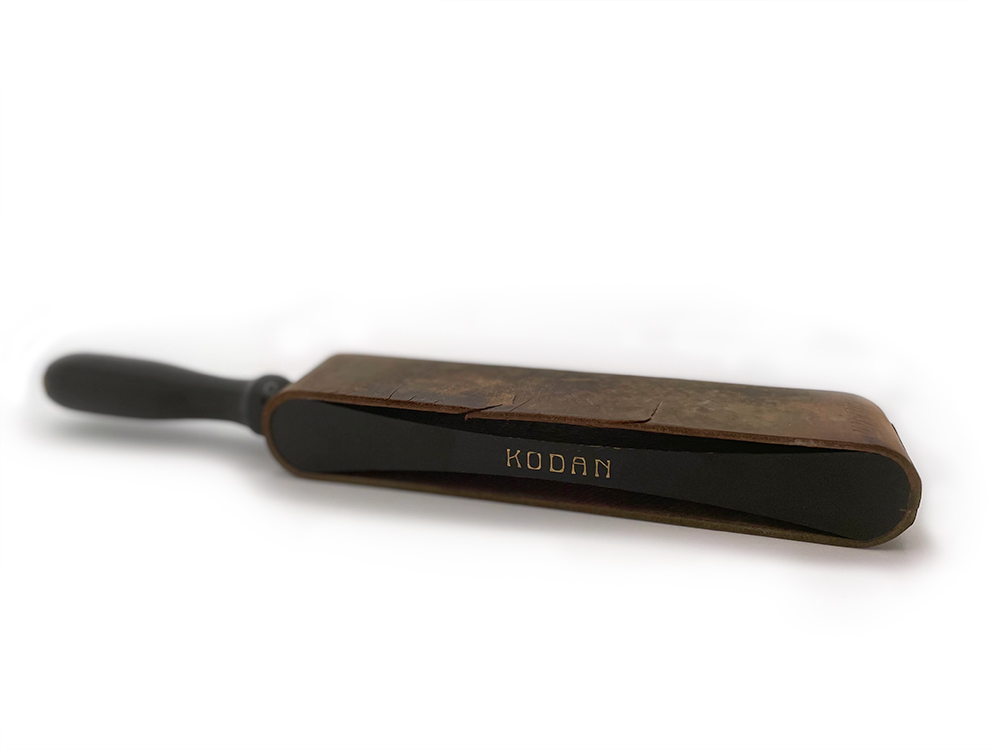
The classic strop consists of a strip of leather (the name itself derives from the Latin corium which means leather) and can take on different shapes:

  • hanging strop – it’s the most common type and has a hook at one end to be able to fix it to the wall or to a stable support and at the other a handle that allows those who use it to stretch it;


  • Hanging strop


  • paddle strop – the leather strip is attached to a rigid support of slightly shock-absorbing material (like wood);

  • Paddle strop


  • loom strop – the leather strip can be tightened by means of a metal frame with a wooden handle and a screw system whereby the tension of the leather is adjusted by screwing or unscrewing the handle.
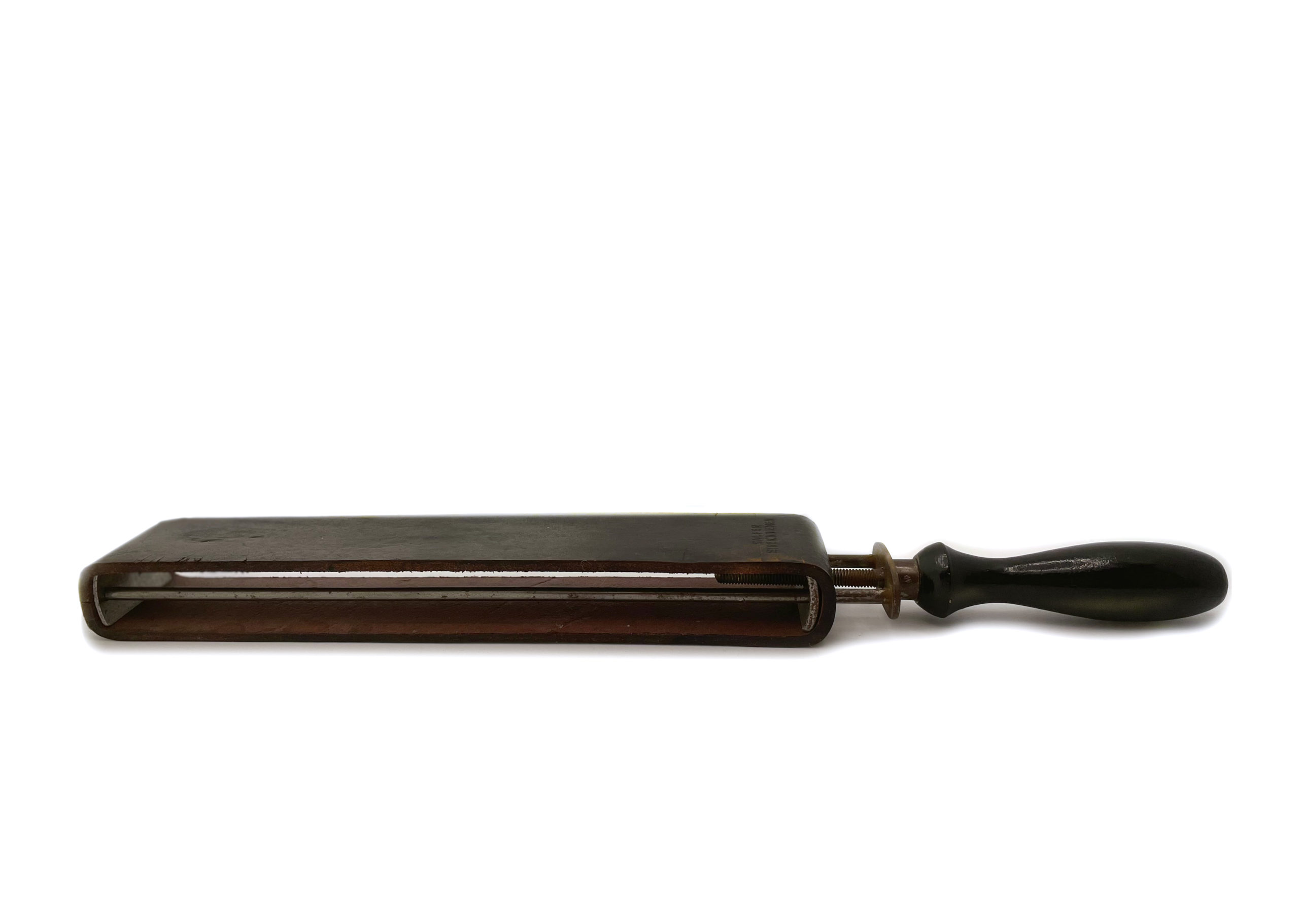
Loom strop


The strop should be used after sharpening the razor and before shaving:

  • the razor is placed on the leather, flat, so that the edge and the back of the blade are both in contact with the stretched leather strip;
  • move the razor along the strip away from yourself with the back looking forward and the thread looking towards you. Often the strop is narrower than the blade and it’s therefore necessary to advance the razor by performing a diagonal movement, in order to cover the entire length of the blade;
  • once reached the bottom of the strop, without lifting it, rotate the razor on the back (and not on the edge!), placing it in the right position to start an identical “return” path towards you;
  • the movement must be done quickly enough (40-60 “turns” – back and forth – per minute) and with as little pressure as possible.

It’s necessary to pay the utmost attention as an incorrect use of the strop can damage the edge, which is very thin and bends easily, then making shaving uncomfortable.

Another important aspect is the maintenance of the strop: leather is in fact a natural material that tends to deteriorate over time.

  • The first rule is to store the strop in a dry place (therefore possibly not in the bathroom, where humidity is often high);
  • any cuts caused by the razor can be removed or regularized using a pumice stone or fine sandpaper, taking care to even out the entire surface of the strip;
  • if the strop has been stored rolled up for a long time and creases have been created, these can be eliminated by spreading the strip on a flat surface and rolling a bottle of hot water over it;
  • after a few years of use, it may be necessary to reinvigorate the leather with a special cream, but to avoid damage it’s good to check this aspect with the manufacturer.
Its Majesty, the straight razor

The custom of shaving goes back thousands of years: it seems that already in prehistoric times the first men removed the hair of the beard one by one with their hands, and then moved on to using small shells as tweezers and sharp stones or bone fragments as razors.

It was probably the ancient Egyptians who introduced the real razor, a bronze or copper blade with a very sharp curved shape, which could only be handled by experts.

A further step forward came with the Romans who, as some finds that have come down to us show, made razors in iron, obsidian and flint.

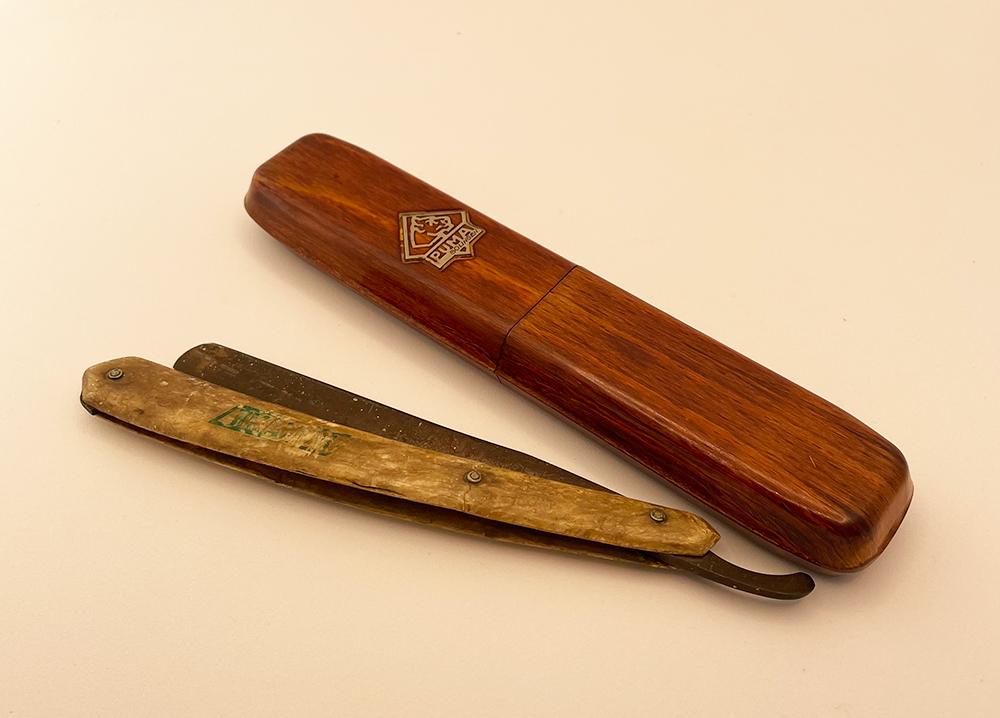
Over the following centuries, these tools underwent minor improvements, but we have to wait until the end of the 17th century to witness the birth of the straight razor, also known as a barber’s or folding razor, since the blade folds inside the handle.

The first razors of this type were made in Sheffield, England. Here, around the middle of the 18th century, Benjamin Huntsman devised a procedure that allowed to obtain a particularly hard type of steel (later known as Sheffield steel), suitable for the manufacture of sharp blades which were later mounted on decorated handles; his method was also quickly adopted by the French and Germans and the latter became renowned manufacturers of straight razors, so much so that they began to talk about Solingen razors to indicate those produced in the homonymous area located in North Rhine-Westphalia.

The main parts of the straight razor are:

handles or scales: the two main parts that make up the handle to protect the blade once the razor is closed, made of various materials including wood, horn, ivory, ivory, tortoise shell and mother-of-pearl;

pivot: the pin on which the narrow end of the balde rotates;

tang: the upward curved metal end of the narrow part of the blade beyond the pivot which acts as a lever to help raise the blade from the handle. One or two fingers resting on the tang also help stabilize the blade while shaving;

shank: the narrow support piece between the tang and the main blade which sometimes features decorations and the brand stamp. The top side and the under side of the shank can sometimes exhibit indentations for a more secure grip;

shoulder: the curved lower part of the main blade from the shank to the cutting edge;

heel: the point where the shoulder joins the cutting edge;

toe: the endpoint of the cutting edge at the front of the blade, opposite to the heel;

stabilizer: a thick strip of metal running transversely at the junction where the main blade attaches to the shank. It cab be double, single single, or can be absent in some razor models;

back or spine: the arched, non-cutting top of the blade;

cutting edge: the cutting part of the blade opposite the back;

point or head or nose:  the other free end of the blade, at the opposite end of the tang on the spine.

Straight razor, private collection Antica Barbieria Colla


Straight razors were widely used throughout the 19th century and in many countries until the mid-20th century; however, as they require more attention during shaving and careful maintenance (periodic sharpening on stone and use of strop to keep the blade clean and sharp), they have progressively been replaced by other types of razors.

However, there are still today a certain number of enthusiasts and both artisanal and industrial producers in Europe (especially in Germany), North America and Asia (particularly in Japan).